
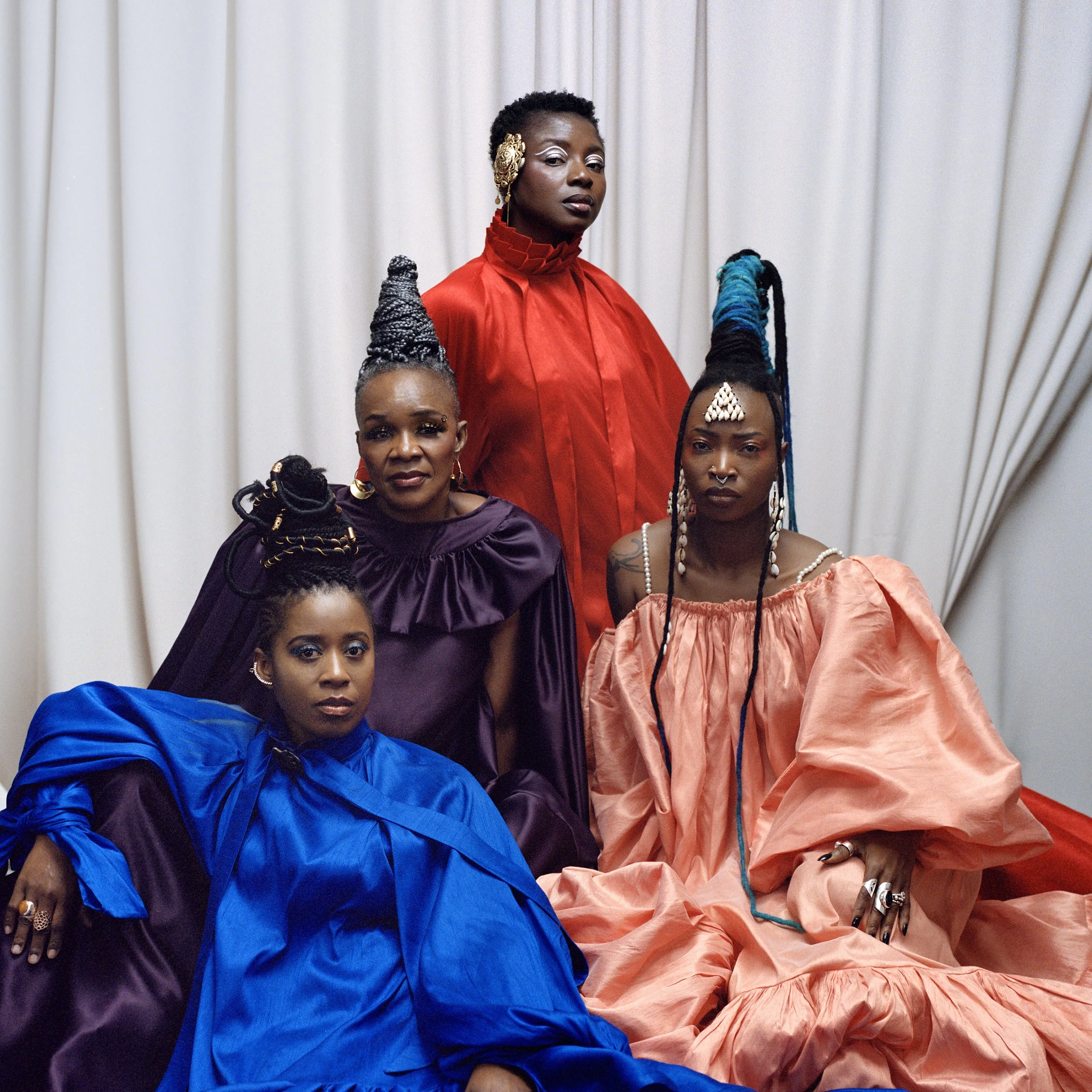
Les Amazones d’Afrique
Les Amazones d’Afrique is a creative force that embraces international voices; sweet, strong harmonies that summon the rights of women and girls; and a meltdown of heritage and new gen talent. They were formed in Bamako, Mali, in 2014 by three renowned Malian music stars and social change activists, Mamani Keïta, Oumou Sangaré and Mariam Doumbia, and the collective has since expanded to involve many female artists from across Africa and the diaspora, including Angélique Kidjo, Nneka and rising Malian star Rokia Koné.
While their cause — campaigning for gender equality and eradicating ancestral violence — is worthy enough in itself, their musical creative expression is equally powerful. Richly melodic and far-ranging, it blends pan- African styles and collaborative harmonies with gritty, contem-porary pop. The band’s two previous albums have garnered considerable acclaim — The Guardian’s Top 50 albums of 2017, NPR Music’s best albums of 2020, and featuring on President Obama’s playlist. They have performed on Glastonbury Festival’s Pyramid stage and featured on flagship BBC music show Later... with Jools Holland.
Following two successful albums produced by Congotronix innovator Doctor L, the band have worked with renowned pop producer Jacknife Lee (U2, Taylor Swift, Modest Mouse) to present a totally fresh new sound on their third album Musow Danse, which draws inspiration from hip-hop, trap, and electronic music.
INSTAGRAM | FACEBOOK | YOUTUBE
Les Amazones d’Afrique are represented by Wildtune for UK & Ireland Bookings and 3D Family booking for other markets.
Watch
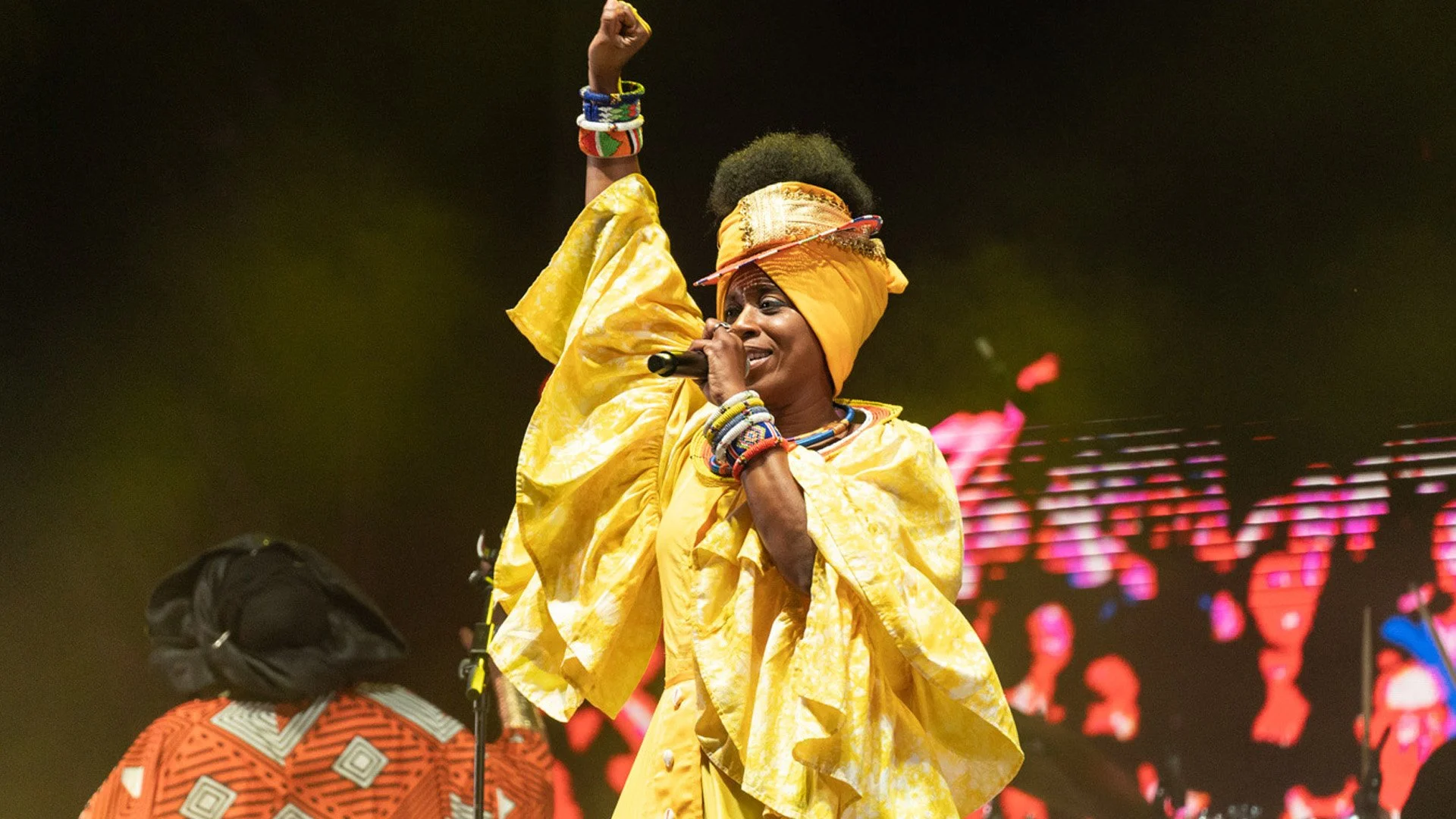
Musow Danse (live at Jazzaldia 2024)
Live Reviews
“Powerhouse West African supergroup Les Amazones d’Afrique open day two of Glastonbury with a set that combines striking political activism with desert blues, dub, and crunchy, glitched-out electronics... It’s a remarkable mix of sweetness, seriousness and technical skill.”
“A proud, forceful demonstration of the strength and variety of modern African music”
“A rousing and defiantly modern revolution in sound”